- About
- Programmes
- campus
- Admissions
- Careers & Placement
- Experience
- Contact
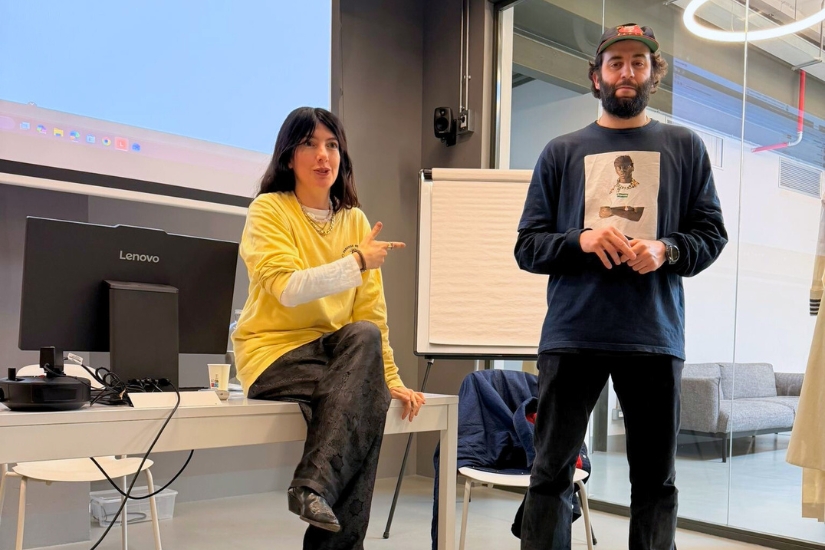
How do you build an artist’s image through styling, photography, and editorial language? This is the question at the heart of the Industry Project “Image Project” developed by our MA in Fashion Styling students and led by Project Leader Cristiana Rivellino Santella.
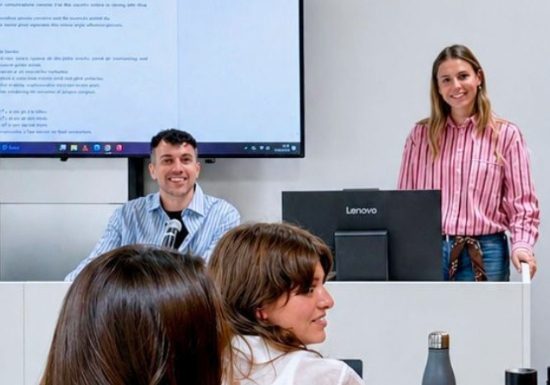
The project takes Coez, one of the most influential singer-songwriters on the contemporary Italian music scene, as its reference point. For the Launch Brief, the students met with Tommaso Biagetti, the artist’s creative director and manager, who introduced the project by sharing his thoughts on Coez’s artistic career, the construction of his public image, and the relationship between musical identity, visual aesthetics, and communication.
This first meeting was a key moment for discussion and project orientation. Through dialogue with Biagetti, students were able to explore the dynamics that guide the definition of an artist’s image in the contemporary landscape. In a subsequent phase, there will be a direct meeting with Coez, once the students have developed their creative proposals.


Starting from this briefing, students were asked to work on the artist’s image by creating a fashion editorial accompanied by an interview and designing a fanzine, conceived as an editorial object capable of translating the vision developed during the project into visual and narrative form.
The goal is not to replicate or consolidate the artist’s already well-known image, but to propose a new, coherent, and conscious interpretation of his identity. This design exercise requires students to ask themselves some fundamental questions: What image of Coez should be conveyed? Should his current identity be reinforced, or should a new interpretation be proposed? What visual and narrative message should be constructed through styling, photography, and editorial language?
The work will start with the definition of a clear and structured editorial concept, which is essential for the construction of the entire project. Possible creative directions include: urban minimalism, 90s aesthetics, more intimate and vulnerable dimensions, deconstructed elegance, sophisticated street style, or a nocturnal and metropolitan dimension. Each proposal must maintain consistency between styling, photography, interviews, and editorial layout.
The styling phase involves the design of 3–5 complete looks, with particular attention to silhouettes, color palettes, materials, accessories, and details. Each stylistic choice will be motivated and linked to the narrative concept, transforming styling into a true tool for visual storytelling.
At the same time, students will have to define the visual treatment of the shoot, working on fundamental elements such as photographic mood, choice of locations, type of lighting, color palette, and visual rhythm of the images.
A central role will also be given to writing the interview, developed as an integral part of the editorial narrative. Not promotional content, but a dialogue capable of exploring the artist’s identity, image, and creative process.
The final result will be the creation of a fanzine, designed as a complete and credible editorial object, capable of consolidating the narrative and visual identity of the work carried out. Through this Industry Project, students have the opportunity to engage with real processes of artistic image construction, developing strategic skills in defining visual identities, designing fashion editorials, and producing contemporary editorial content.
This experience fully reflects the educational approach of our MA in Fashion Styling: combining aesthetic research, strategic thinking, and creative experimentation to train the visual communication professionals of tomorrow.