- About
- Programmes
- campus
- Admissions
- Careers & Placement
- Experience
- Contact
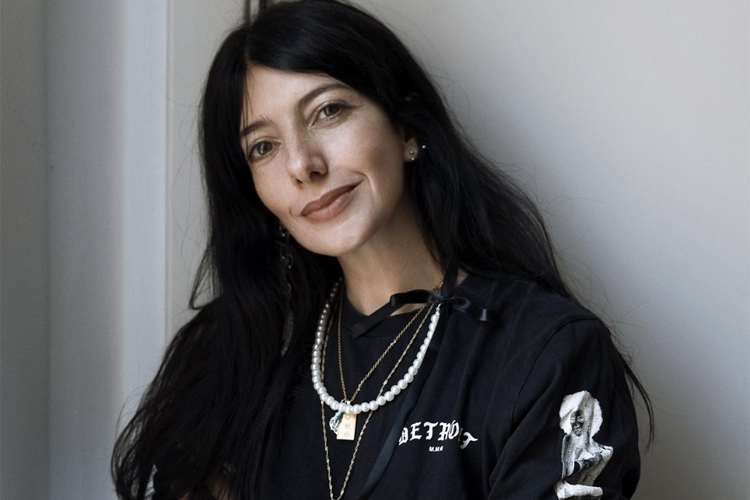
Styling is much more than an aesthetic gesture: it is language, culture, and visual storytelling. The Master in Fashion Styling at Accademia Costume & Moda is designed to train professionals capable of interpreting the present with sensitivity and vision — blending technical skills, critical thinking, and narrative ability.
Leading this journey is Cristiana Rivellino Santella, Creative Director, stylist and image consultant with over twenty years of experience across fashion, publishing, and music.
A Creative Director, image consultant, and stylist for numerous brands and celebrities, Cristiana has built her career between Rome, Verona, and Milan, collaborating with some of the most renowned names in both the Italian and international fashion scene.
After graduating in Industrial Design from the Faculty of Architecture “Ludovico Quaroni” at La Sapienza University in Rome, she began working with brands such as Jil Sander, Stone Island, and Trussardi, and as a consultant for Raf Simons, Nike, adidas, Diesel, Malo, René Caovilla, and Salvatore Ferragamo, among others. In the publishing world, she has held roles as fashion editor, fashion coordinator, and head of fashion digital area, collaborating with magazines including L’Officiel Italia, Marie Claire, Vice, Vanity Fair, Grazia, and Pig Magazine. Alongside her editorial work, she has shaped the image of artists and celebrities such as Ligabue, Elisa, Francesca Michielin, Jovanotti, Colapesce Dimartino, Franco126, and many more.
Today, as Coordinator of the Master in Fashion Styling at Accademia Costume & Moda, Cristiana guides students through a learning experience that combines professional rigour with creative poetry.
Cristiana, what has your journey been like? How did you arrive at styling, and which experiences have shaped your professional and personal vision?
My path was born from a deep curiosity for aesthetics and visual communication. After attending a Classical Lyceum, I chose to study Industrial Design at La Sapienza University in Rome—an experience that provided me with a solid design foundation and an analytical approach to the creative process. I then deepened my studies in Cool Hunting and contemporary visual languages.
From there, my journey into styling and image consulting began: for about twenty years, I’ve been working as a stylist and creative consultant for artists, brands, and publications, contributing to projects ranging from music to fashion, from editorial branding to digital campaigns. Every experience—whether working with artists or major brands—has helped define a vision that merges empathy, visual culture, and strategy.
In recent years, I’ve paired my professional work with a strong commitment to education: I guide students in developing their visual identity and creative thinking, trying to pass on an approach that is both concrete and poetic.
My vision of styling is deeply linked to storytelling: for me, every project is a visual narrative that intertwines aesthetics, authenticity, and culture. I believe that style is not just a matter of form, but a lens through which we interpret reality—with sensitivity, awareness, and imagination.
What does “doing styling” mean today? It’s not just about dressing a body or constructing an image, but interpreting a time. What makes styling such a powerful language today?
In my view, it’s not simply about dressing a body—it’s about reading an era. It’s about understanding what an image conveys even before anyone speaks about it. Styling is a powerful language because it exists at the intersection of aesthetics, culture, and perception: it translates the present into visual form.
In a world saturated with images, a stylist doesn’t just choose a look—they dress a point of view.
What is the most fascinating—and most difficult—aspect of your work? Is there a moment or a project that, for you, represents the true essence of this profession?
The most fascinating aspect is also the most difficult: giving form to something that doesn’t yet exist—and making it feel inevitable. Styling is a constant balance between intuition and control, between inspiration and logistics.
I don’t think there’s a single project that truly represents me. Every time an idea takes shape and becomes something more real than I imagined, that’s when I understand why I chose this profession.
In a world dominated by social media, what distinguishes a true stylist from someone who simply “creates content”?
The difference is that a stylist doesn’t create content—they create meaning. A piece of content can be beautiful, viral, immediate, interesting, or useful; styling, on the other hand, gives form to a language—a coherent message that speaks of people, contexts, and visual culture.
The stylist’s work requires a slow and attentive gaze, which is quite the opposite of what this world often demands: speed and synthesis.
You must observe, filter, select, and coordinate elements so that the result is not merely aesthetic but also narrative. The distinction, therefore, does not lie in the medium, but in the purpose with which one interprets time, reality, and the person in front of the lens.
What skills and sensitivities do you try to pass on to the Master’s students? What would you like them to take with them after these months of training?
As the Master’s Coordinator, I try to convey not only the techniques of styling: I want students to develop a critical and curious eye, a sensitivity to visual culture, and the ability to read the times we live in. I want them to understand that styling is not just about aesthetics, but about storytelling: every choice communicates, every detail matters.
At the end of the course, I’d like them to carry with them a dual awareness: mastery of professional tools, and the confidence to trust their creative instincts. And, if possible, a touch of irony towards the profession they’ve chosen.
The Master prepares professionals ready to enter the industry. But above all: what kind of people? What human and creative attitude do you think is essential for those who choose this path?
The Master certainly trains complete professionals, but above all people who can observe and interpret the world with curiosity and sensitivity. It’s not enough to have taste or technique: one needs openness, the ability to listen, and a certain creative courage.
Those who choose this path must be willing to challenge themselves, to ask uncomfortable questions, and to seek visual answers that feel authentic. They must learn to combine rigour and intuition, method and imagination. In other words, it’s not enough to “put beautiful things together”: one must turn every choice into a small story—one that can surprise and communicate.
To support this growth, I’ve built a team of lecturers who are fully active in the fashion industry: versatile, highly skilled professionals with tangible backgrounds and collaborations with major and influential names in fashion. This allows students to engage with people who experience the sector daily and to learn how to navigate it with awareness and practicality.
If you had to describe the soul of this Master in one sentence, what would it be?
To develop a critical and creative eye—capable of reading the present and translating it into images that communicate, move, and endure over time.


Choosing the Master in Fashion Styling at Accademia Costume & Moda in Milan means joining one of Italy’s leading programmes in fashion education, designed for those who want to turn creativity into a professional language.
This Master explores styling as a form of visual communication, cultural interpretation, and creative direction, offering an in-depth experience within the heart of Italy’s fashion capital.
Guided by Cristiana Rivellino Santella, Creative Director and Coordinator of the Master, students learn to observe, interpret and narrate the present through style — transforming intuition into coherent and powerful visual stories.
The Master in Fashion Styling combines academic excellence, hands-on experience, and industry collaborations with leading brands and professionals, preparing future fashion stylists, image consultants, creative directors, and visual storytellers ready to enter the international market.
At Accademia Costume & Moda, every image becomes a message, every project a story, and every student a new voice capable of shaping the aesthetics and narratives of contemporary fashion.